
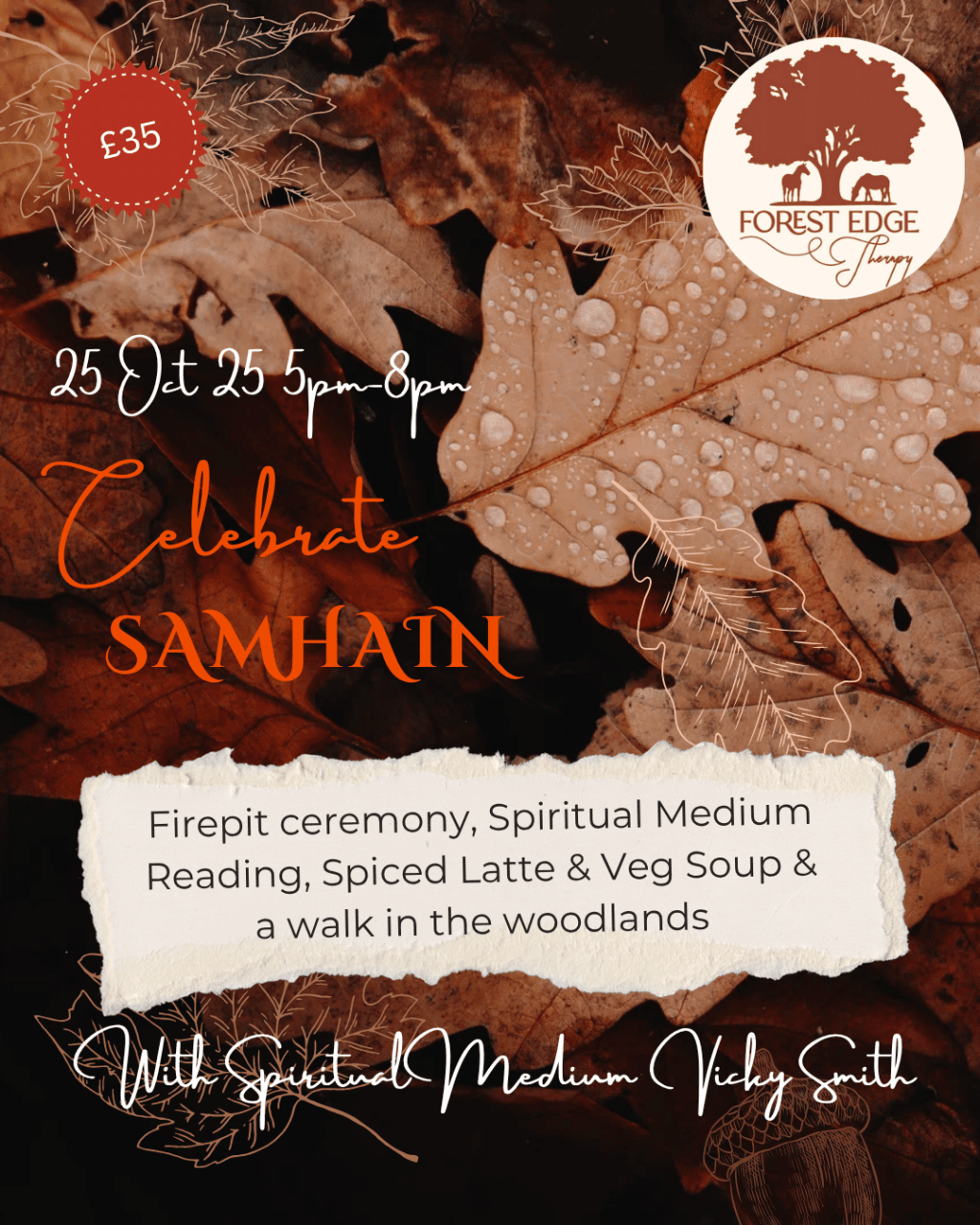
Samhain (pronounced Sow-in) is one of the four great fire festivals of the Celtic year rooted in the northern hemisphere, because it arose from the Celts and Druidic peoples who worked with the agricultural cycles, climate and the sun’s path across the sky in north-western Europe. The fire festivals also include Imbolc, Beltane and Lughnasadh (pronounced Loo-nah-sah) all marked by bonfires, feasting and rituals. It is samhain that marks the descent into winter, the final harvest and the thinning of the veil between worlds of the living and the dead, or the physical, and non-physical. A good time to honour our ancestors who walked on the lands before us. It is also a good time to release what no longer serves from both our own lifetimes and those of our ancestors making way for renewal and transformation. Samhain’s invites you to embrace the longer nights and rest, as nature rests, until the wheel of the year turns and we reach the solar festival of Yule or the Winter Solstice, a time when the light returns and the Oak King takes over from the Holly King.
The four fire festivals represent the Earth Mother (Body) whilst the four solar festivals represent the Sky Father (Spirit), which include Ostara and Mabon the equinox’s of spring and autumn and Litha and Yule the solistices of winter or spring. A beautful combination of Earth and Sky, Mother and Father, Body and Spirit and ‘as below, so above’. Beltane which celebrates fertility and life, stands opposite to Samhain. Like inhale and exhale, the pair remind us that creation and dissolution arevpart of the same breath. Samhain therefore, is one of the great gateways of the year, where endings and beginning meet. Some acknowledge as the Celtic New Year because of this.
Samhain is celebrated from sunset on October 31st to November 1st. Communities once gathered around great bonfires for protection and cleansing, livestock were brought in from the summer pastures, and offerings were made to ancestors who were thought to walk among the living. Traditional offerings include food and drink and a place at the celebration. Over time, Samhain’s themes of death, renewal, and ancestral connection blended with Christian traditions, giving rise to All Hallows’ Eve and, eventually, Halloween which is now perhaps so commercialised it’s harder to see the original meaning of the festival.
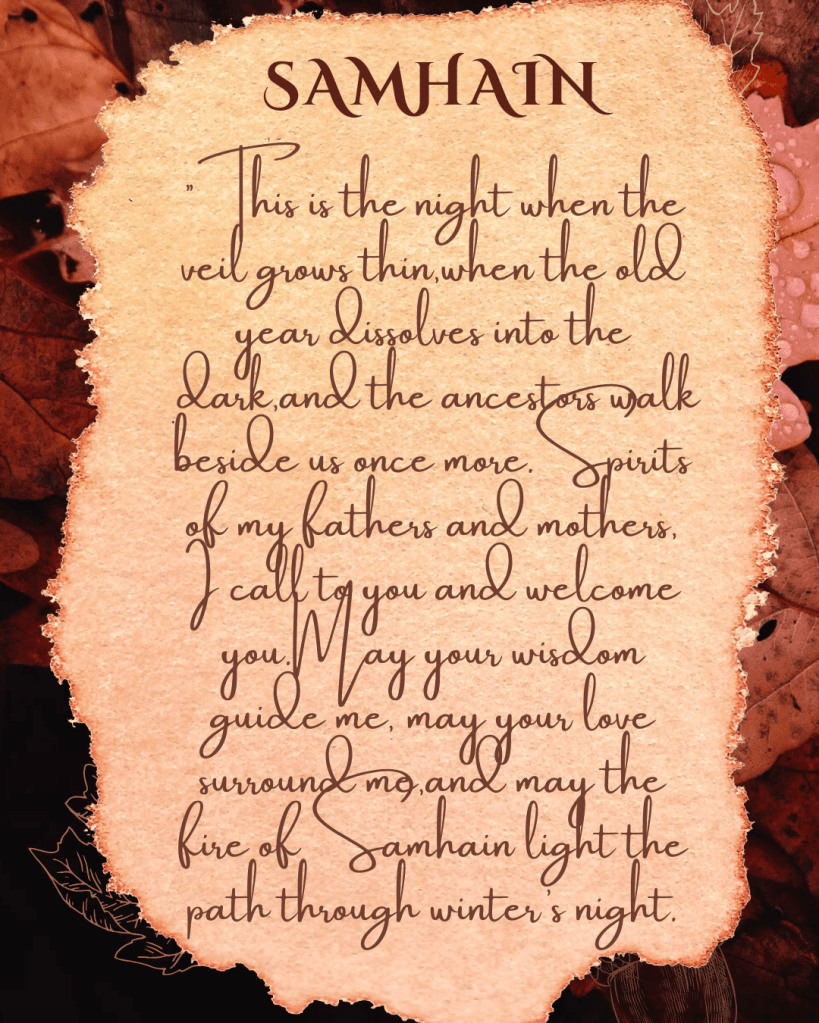
We invite you to celebrate this Samhain eve as your ancestors may have done, perhaps light a single candle as dusk falls, placing it where its glow can be seen. Speak aloud the names of those you love who have gone before—human, animal, or ancestor of spirit—and thank them for walking with you. Then, write on a slip of paper something you are ready to release: a burden, a fear, a pattern that no longer serves. Offer it to the flame, and as the smoke rises, imagine the earth receiving it, making space for new seeds to stir in the dark. Close with a blessing for the winter months ahead, trusting that the silence of the season is not emptiness, but the womb of renewal.

 Forest Edge Therapy
Leave a reply to Helen Gilbert Cancel reply